
Key finding
Reserve the specified quiet zone and verify the chosen code on the finished pack, including any curvature, fill or decoration.
Keep the barcode area clear in the original design
A barcode needs an appropriate quiet zone, the clear area around the symbol that helps a scanner distinguish it from nearby graphics. Requirements vary by symbol and implementation. Reserve the required space before decorative elements are positioned. A thin printed line, a foil border or a background pattern can look visually separate from the code to a human yet interfere with the intended quiet zone. Give the prepress team the barcode specification and the artwork file with a protected zone. Keep that zone visible in the production proof, especially when the graphic design and product identification data are prepared by different vendors.
Specular reflections can change what a reader receives
A highly reflective surface can return a strong highlight to a scanner depending on angle and lighting. Transparent packaging may also present a different background when filled, and a decorative film can add another reflection in the field of view. These effects are reasons to verify a code on the actual pack, rather than assuming a proof on white paper establishes the result. When space allows, place decoration away from the symbol and evaluate a stable, suitably contrasting print area. On a clear container, compare both the empty and filled pack if contents influence the optical background. Include any overwrap or varnish that will be present at retail.
Curvature changes the effective shape of the symbol
On a narrow bottle or tapered jar, the code may wrap away from the scanner. A flat artwork rendering cannot show the resulting viewing geometry. GS1's implementation guideline discusses shape, placement and practical scanning on curved packs. Test the code at its proposed size and location on a real sample, taking into account shoulders, seams and how the pack is usually presented. Moving a logo by a few millimeters may be easier than correcting a barcode that lands across a boundary after print. Where a pack is small, solve the available space jointly with the barcode owner, artwork team and packaging supplier.
Scanning once is different from verification
A successful phone scan can be a useful informal check. It does not substitute for formal barcode verification with the method and equipment required for your application. Ask the responsible party which grade and documentation the trading partner expects, which symbol and data syntax are in use, and what production conditions the sample should represent. Check the encoded data as well as print quality. A code can look sharp but contain the wrong identifier or point to an incorrect destination. Use actual saleable artwork and capture the identifiers of the proof and packaging lot so the test can be repeated if something changes.
Check how dual symbols share space
Some packaging will carry a linear and a 2D symbol during the transition. That makes visual spacing and placement more important, particularly when a brand wants a decorative logo on the same panel. Work with the barcode owner to identify which codes are intended for retail scanning and which, if any, serve other purposes. Review the relevant retailer guidance before replacing an existing symbol. Avoid assuming that the same decision works in every market or channel. A drawing showing the available flat area, expected print tolerances and positions of both symbols helps prevent last-minute changes to the decoration.
Keep the verified construction as a release reference
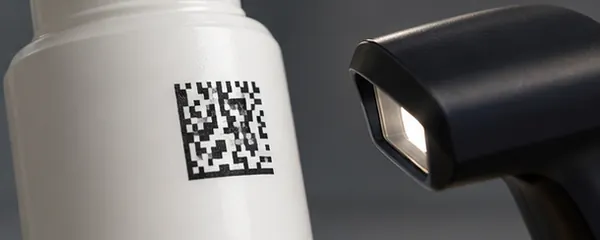
Record the pack material, barcode specification, artwork version, decoration location, scanner or verifier method, and the reference sample. Recheck the result if the decoration moves into the reserved area, the packaging shape changes or a coating affects the reading surface. For a sample request, share a dimensioned artwork map indicating the barcode and protected space. The illustration on this page is conceptual and is not a verified production symbol. Use the official GS1 guideline and your trading partner's requirements to approve the final application. Good decoration leaves room for identification to work reliably across the real packing and retail environment.
Discuss a project
Share your artwork, substrate and planned quantity so we can discuss the right sample for your application.
Request a quote