
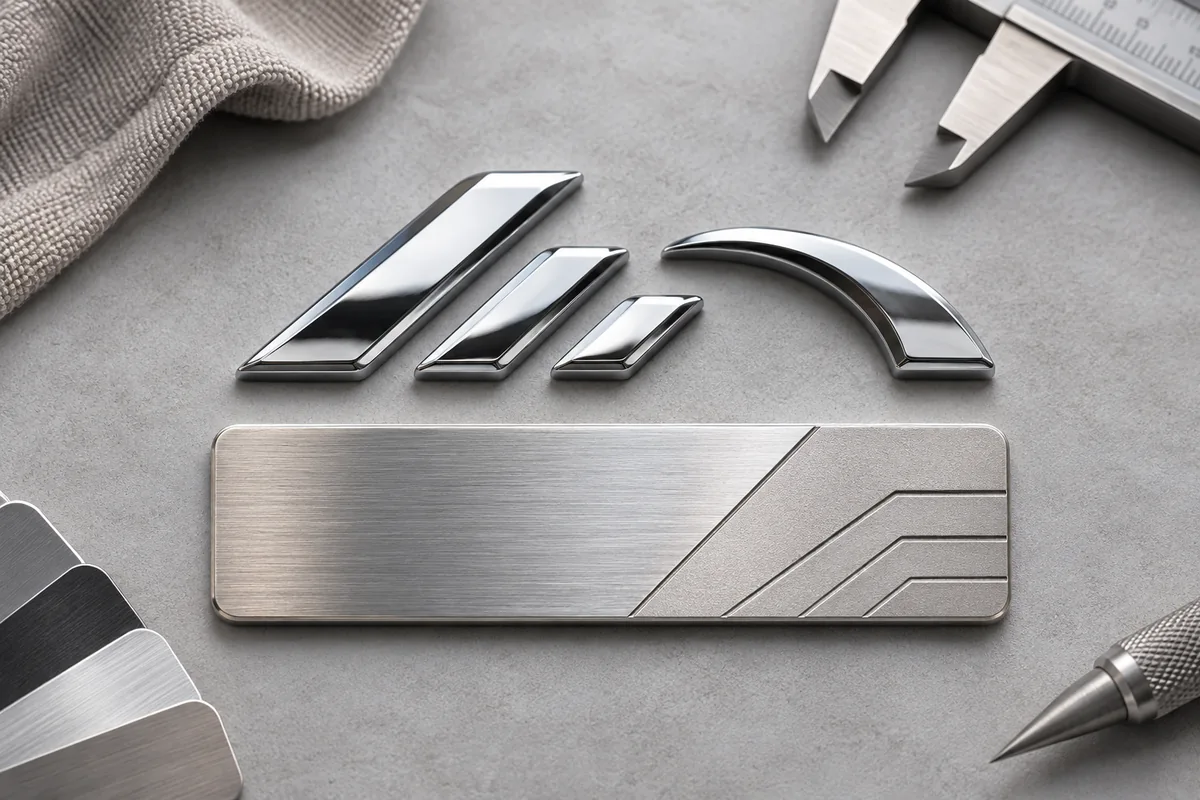
Compare the shape and the layout
A transfer can place a thin wordmark across a clean product housing without adding a rectangular background. A nameplate can group a logo with model information or serial fields inside one defined footprint. Check readability and compare finished thickness if the mark sits near a grip or fitted accessory.
Review how each construction attaches
Transfer elements are placed together with a carrier. A nameplate may use adhesive, fasteners or another mounting method. Confirm which method fits your part and whether there is space to apply it. If frequent handling or cleaning is expected, request the supplier’s construction data and test under the intended conditions.
Decide whether variable information belongs there
If the logo repeats on every item but the serial number changes, you may need two specifications. Keep a stable decorative mark and put changing information in a label or nameplate format designed for traceability. Agree how those components are tracked and reordered.
Can a decorative transfer replace a required identification plate?
Check the equipment specification and applicable requirements before changing a required plate. Decorative appearance alone does not establish suitability.