Identify what the adhesive will touch
Start with the resin and part number. A nominally acrylic panel may have a protective film, an anti-scratch coating or a printed surface. Polypropylene and polyethylene often have lower surface energy, which can make wet-out more difficult. Ask whether the supplier treats the parts and whether that treatment is consistent between batches.
Use a production-representative trial
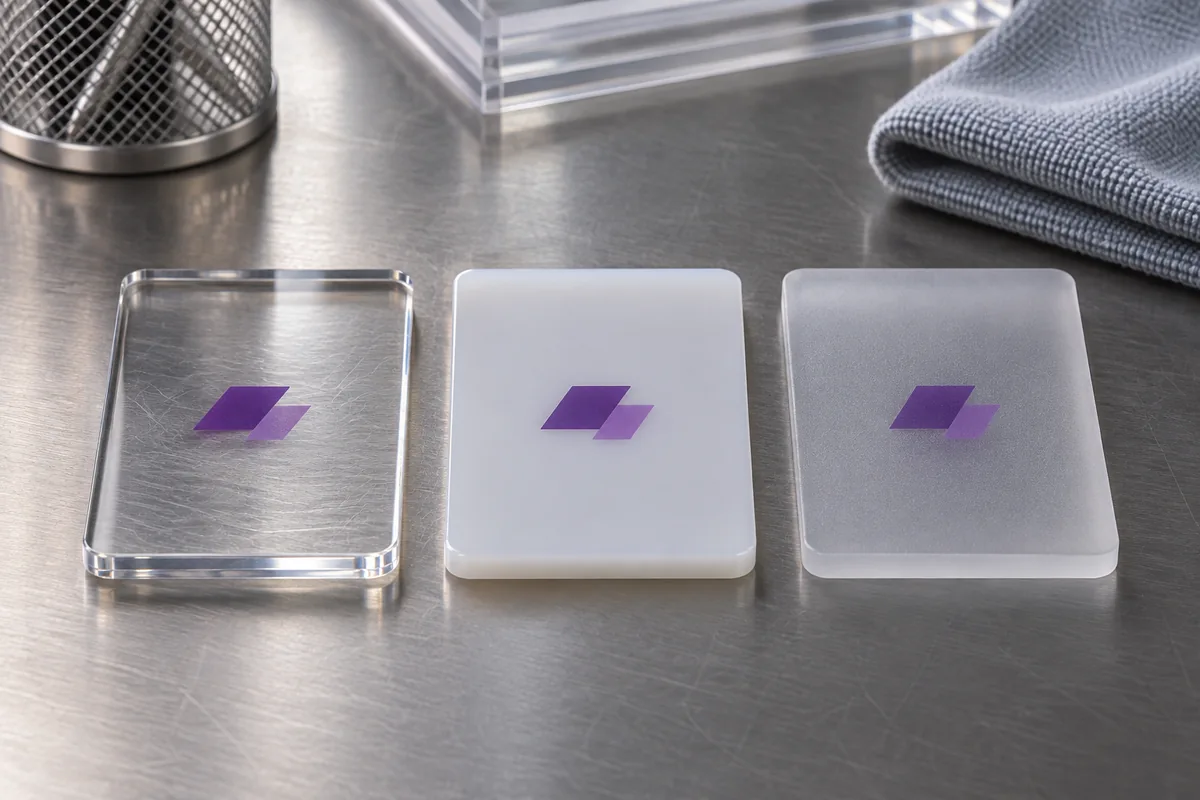
Apply transfers to several actual parts using the same preparation method planned for production. Include both a broad graphic and the thinnest strokes in your artwork, especially if the surface is curved. Record the finish, batch and cleaning method so a repeat trial means something if the part changes.
Check flex and handling separately
A transfer that looks good immediately can show edge lift when a lid bends or the part is handled repeatedly. Test the same movement and cleaning routine that buyers will use. If the trial fails, compare a different application area, a smaller design or an adhesive construction selected for that surface.
Will cleaning alone make a transfer stick to PP or PE?
Cleaning removes contamination, but it does not guarantee compatibility with low-surface-energy plastics. Validate the actual part and adhesive together.