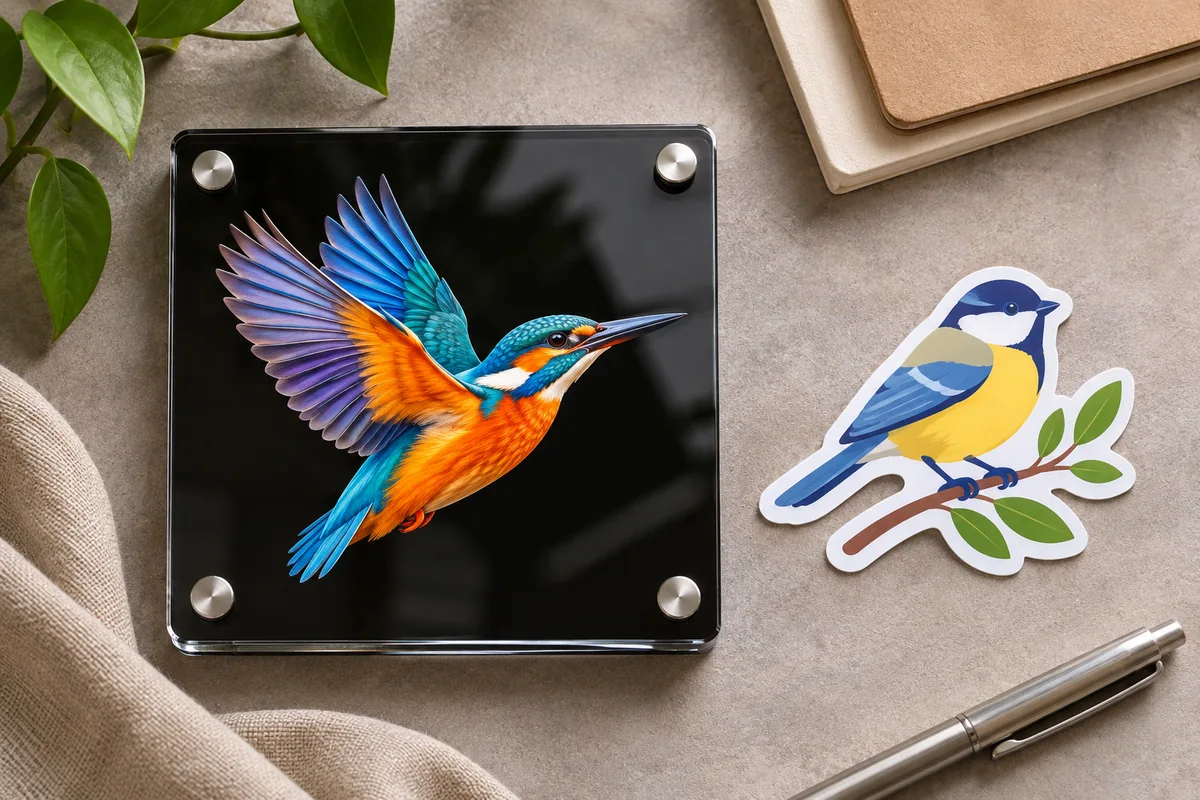
Compare what stays on the product
With UV DTF, the carrier is peeled away and separate design elements remain on the surface. A vinyl sticker retains its film across the cut shape, even when parts of that film are clear. Put both samples under side lighting if the visible outline matters, especially on dark or glossy packaging.
Match the format to the task
A scattered floral design on a glass candle jar is a useful transfer candidate. A single rectangular label carrying dense text may be easier to align, read and replace when supplied as a continuous sticker. Request an exact sample for tight curves, flexible packaging and treated plastics, since construction matters more than the category name.
Compare costs per usable piece
Time a short application trial. Include sorting, alignment, carrier removal and rejected pieces. A lower price per label can be offset by longer application time if staff must position small artwork precisely or remove failed transfers from expensive packaging.
Does vinyl always last longer?
Durability depends on the specific film or transfer, adhesive, surface and exposure. Compare documented test conditions or run the same trial on both constructions.