
Follow the construction and application
A typical UV DTF system prints with UV-curable ink and uses a carrier and adhesive film to place the graphic onto an object. In garment DTF, artwork is printed onto film, combined with a hot-melt adhesive and transferred onto the fabric under specified heat and pressure. The film, ink and adhesive belong to their respective processes.
Split a mixed merchandise brief
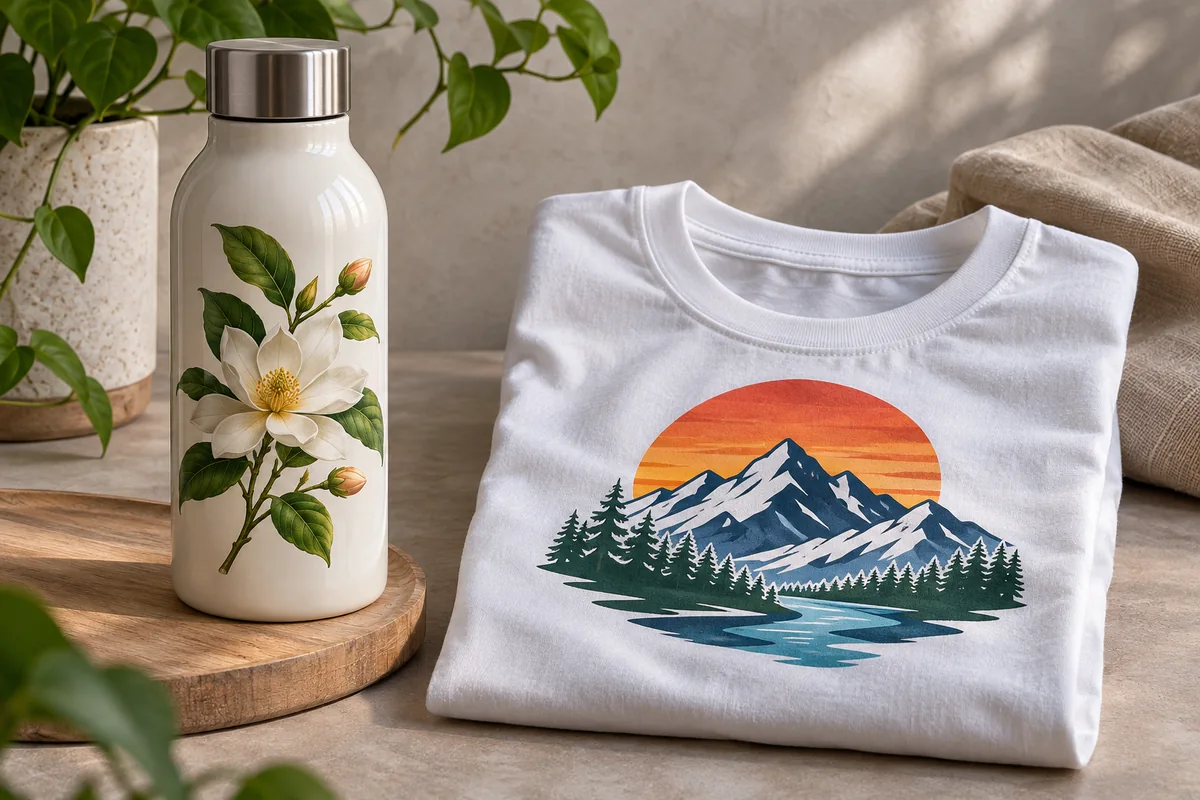
If a campaign includes cotton shirts and glass bottles, create a textile proof and a hard-goods proof. Both can use the same logo master, but adjust size, contrast and smallest details for each surface. Keep the two application instructions with the separate deliveries so that the wrong process is never applied to a finished item.
Test the relevant use
Review stretch and the intended laundry routine for a garment. On a bottle, review transfer release, curved placement, contact with hands and the specified cleaning routine. A favorable textile wash test says little about bottle adhesion.
Can I heat-press a Decalnex UV DTF crystal transfer onto a T-shirt?
These transfers are intended for compatible hard surfaces. Request a garment DTF transfer for a textile project and follow that supplier’s press instructions.